













 |
|
 |
|
 |
|
 |
|
 |
|
 |
|
 |
|
 |
|
 |
|
 |
|
 |
|
 |
|
 |
|
 |
|
 |
|
Cryptocurrency News Articles
Stephan February's Bitcoin Story: From Dismissing It as a Peer-to-Peer Technology to Developing a New Token Protocol on BSV
Nov 18, 2024 at 10:00 pm
BSV developer Stephan February joined the CoinGeek Weekly Livestream this week to talk about developing tools for Bitcoin, his token protocol, scaling Bitcoin, and more.
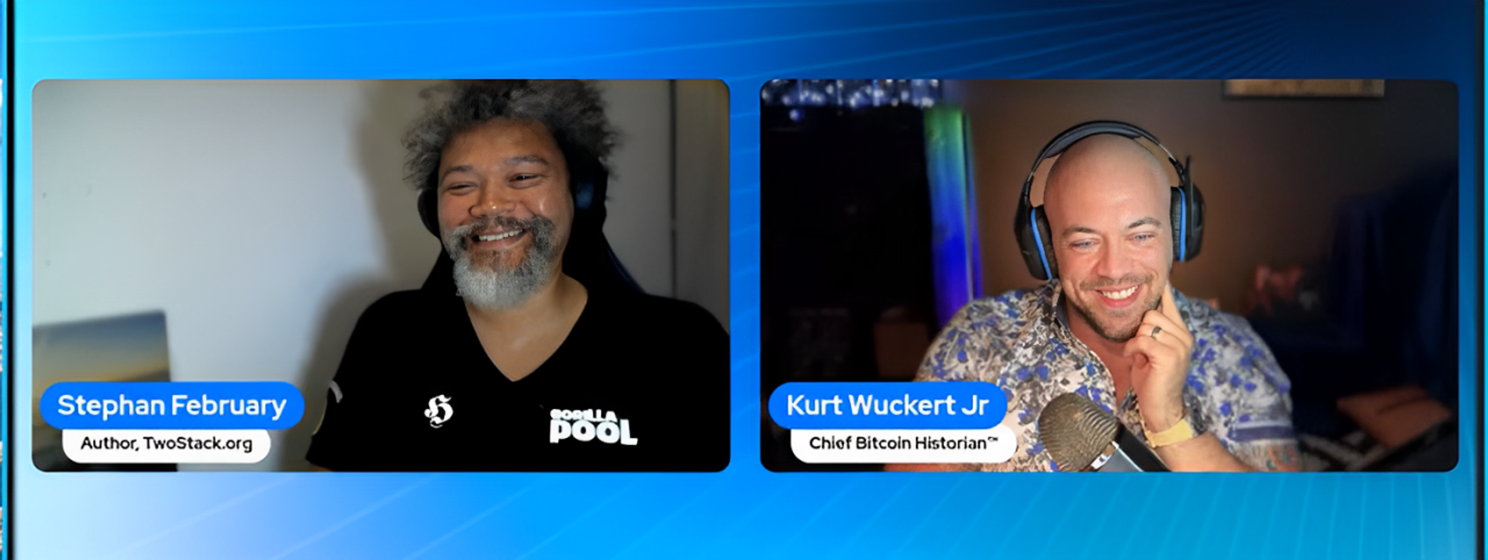
Stephan February, a BSV developer, joined the CoinGeek Weekly Livestream this week to discuss developing tools for Bitcoin, his token protocol, scaling Bitcoin, and more.
Stephan February’s Bitcoin story
February lives in Singapore, where he runs TwoStack.org, among other things. He tells Wuckert he went there on a work assignment in the 90s, met a girl, and decided to stay.
First hearing about Bitcoin before there was even a price, February dismissed it as another peer-to-peer technology that would likely fail. He started looking deeper into it a few years later, in 2012 and remembers buying a drink with it back when it was still used as peer-to-peer electronic cash.
However, he was put off developing on it by all the restrictions being introduced, and it wasn’t until the Bitcoin Cash split in 2017 that he really got back into it. He has developed some front-end tools for Bitcoin since and has recently developed a new token protocol on BSV—the TSL1.
Draft WhitePaper and sCrypt Contracts for the TSL1 Token Protocol is now available for early review. Apache 2.0 Licensed. No Patents.
A new token protocol, network effects, and Ordinals
Wuckert points out how each of the token protocols on BSV has tradeoffs, whether scaling, indexing or something else. He asked February why we should solve these issues and more about the protocol he had created.
February says to think about the big-block future and the nature of peer-to-peer communication. Transactions involve “you, me, and the blockchain,” but they could involve other elements like indexers, overlay networks, APIs, and more. Many potential interesting solutions can be created from this combination of elements.
Wuckert expresses concern that network effects might prevent BSV from winning despite having the best technology. However, he still thinks it will win in the long term because of all the possibilities that can’t happen on BTC. He’s a big fan of 1Sat Ordinals because of the simplicity, scalability, and network effects.
February thinks of Ordinals as “small block tech” because they’ll require running an indexer altruistically unless someone runs one for a profit, in which case there’ll be a floor price to the value of each token. The cost of running it would scale up as the blockchain does, and due to the size of each one, it’s only possible to get a limited amount of them into each block.
Noting how the UTXO model allows for massive scaling and distributing compute horizontally, February notes that the tradeoff is that transaction inputs and outputs are separated. He explained more about his solution, saying it performs a SHA256 calculation inside a Bitcoin script. This significantly reduces the amount of computing required and provides protection against the double-spend problem.
What does this look like 6-18 months from now? After contracting the BSV Association, February says he’d like to hear some developer feedback and see standards developed. In the long term, he wants software to do for Bitcoin what Linux did for the Internet.
To learn more about the new TSL1 token protocol for Bitcoinl, further updates, and a potential recession on the horizon, check out the livestream here.
Watch: Digital Asset Recovery takes token recovery seriously
Disclaimer:info@kdj.com
The information provided is not trading advice. kdj.com does not assume any responsibility for any investments made based on the information provided in this article. Cryptocurrencies are highly volatile and it is highly recommended that you invest with caution after thorough research!
If you believe that the content used on this website infringes your copyright, please contact us immediately (info@kdj.com) and we will delete it promptly.
-

-
- Consensus 2026 Miami: Web3, Blockchain, Cryptocurrency, NFTs, Metaverse, Conference, May 5th — Where Wall Street Meets the Digital Frontier
- May 01, 2026 at 11:27 pm
- Miami buzzes as Consensus 2026 approaches on May 5th, highlighting Web3, blockchain, crypto, NFTs, and the metaverse's shift from hype to institutional and sustainable reality.
-
-
- Bitcoin Miners Electrify the Grid: Ohio Gas Plant Acquisition Powers Up a New Era for Digital Gold
- Apr 30, 2026 at 10:38 pm
- The Bitcoin mining industry is undergoing a significant transformation, with major players aggressively expanding operations and strategically acquiring energy assets like Ohio gas plants to solidify their future in the digital economy.
-
-
- Solana's Slippery Slope: Price Prediction Points to Resistance Loss and Potential Further Drops
- Apr 30, 2026 at 09:08 pm
- Solana is struggling to break key resistance, signaling potential downside. Repeated rejections at $86-$88, coupled with a broken short-term pattern, point to targets as low as $67, or even $40, as sellers maintain control. Investors should watch critical support levels closely.
-
-
- NYC's New Beat: Staking Systems, USD1, and Governance Drive Crypto's Next Wave
- Apr 30, 2026 at 03:02 pm
- From lucrative USD1 earning events to robust governance models, the crypto sphere is buzzing with innovations reshaping how we engage with digital assets, focusing on long-term commitment and stablecoin utility.
-
- OKX Unveils Agent Payments Protocol: Ushering in a New Era of AI Transactions
- Apr 30, 2026 at 02:53 pm
- OKX launches its Agent Payments Protocol (APP), an open standard for AI-driven commerce, enabling agents to manage full business cycles. Explore the implications for AI transactions and agentic payments.