















 |
|
 |
|
 |
|
 |
|
 |
|
 |
|
 |
|
 |
|
 |
|
 |
|
 |
|
 |
|
 |
|
 |
|
 |
|
Cryptocurrency News Articles
Stablecoins Reinforce Dollar Hegemony in the Digital Age
Apr 13, 2024 at 02:27 pm
The debate on stablecoins and their impact on US dollar dominance persists. Howard Lutnick, CEO of Cantor Fitzgerald, sees stablecoins like Tether (USDT) and Circle's USDC as crucial for maintaining the US dollar's economic supremacy. These stablecoins fuel demand for US Treasury notes, providing financial privileges like low borrowing rates and geopolitical influence through sanctions. Lutnick's endorsement stems from their proven resilience, such as USDT's ability to honor redemptions amidst scrutiny. However, concerns remain about CBDCs and their potential geopolitical implications.
Stablecoins: Reinforcing Dollar Hegemony in the Digital Age
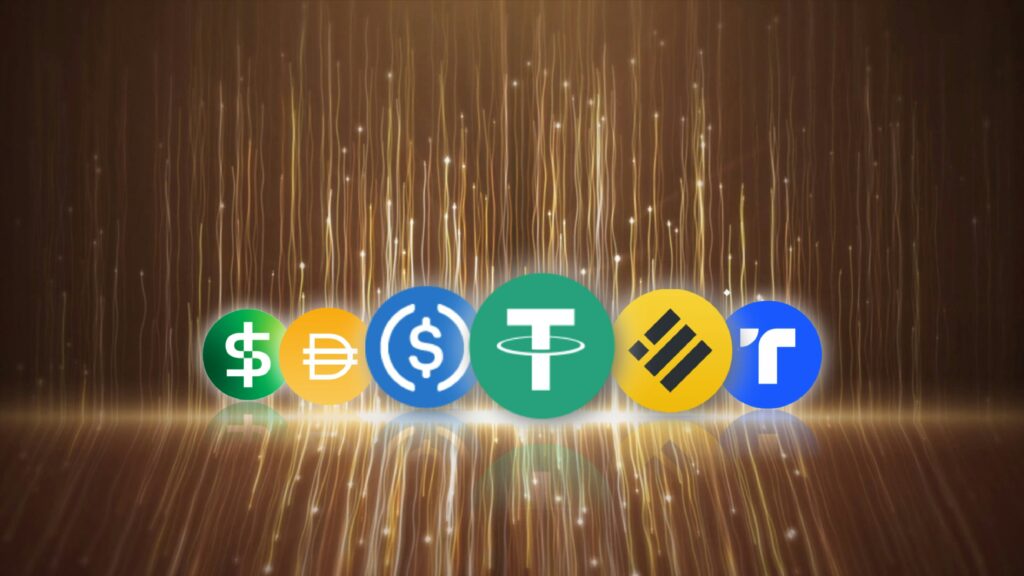
The emergence of stablecoins, cryptocurrencies pegged to the value of the U.S. dollar, has sparked a heated debate over their role in the global financial landscape. At the forefront of this discussion is Howard Lutnick, CEO of Cantor Fitzgerald, who argues that stablecoins, such as Tether's USDT and Circle's USDC, are not only bolstering the dominance of the U.S. dollar but also serving as a cornerstone for the American economy.
Stablecoins: A Pillar of Dollar Hegemony
Lutnick sees stablecoins as a vital component in maintaining the economic dominance of the United States on the global stage. "Dollar hegemony is fundamental to the United States of America," he asserted, emphasizing their role in sustaining the U.S.'s economic strength.
Stablecoins' utility lies in their ability to fuel demand for U.S. Treasury notes without posing a systemic risk to the global economy. This allows the U.S. to enjoy financial privileges, including the ability to incur substantial deficits, secure borrowing at favorable rates, and exert geopolitical influence through sanctions.
Market Presence of Stablecoins
Cantor Fitzgerald's custodianship of Tether, the issuer of the world's leading stablecoin USDT, places the firm at the heart of the stablecoin debate. With USDT boasting a market capitalization of over $107 billion and USDC at $32.25 billion, stablecoins have undoubtedly gained prominence in the cryptocurrency market.
Their versatility has made them a crucial tool in crypto trading, serving as a medium of exchange and collateral in derivatives trading. Moreover, stablecoins proved their worth as a haven during the turbulent monetary tightening of 2022.
Confidence and Critique
The collapse of Terra's algorithmic stablecoin UST in May 2022 shook investor confidence in the stability of stablecoins. However, Tether's resilience during this market turmoil has helped restore trust. Lutnick's assurance that Tether has adequate reserves to back USDT further solidified investor confidence.
Central Bank Digital Currencies: Innovation or Intrusion?
Lutnick expressed skepticism towards central bank digital currencies (CBDCs), particularly their geopolitical implications. He fears that a U.S.-issued digital dollar could be perceived as an "American spy wallet" by international actors such as China.
Future of Asset Tokenization
Looking ahead, Lutnick envisions a future where real-world assets, such as bonds, will be tokenized and traded on blockchain platforms. He believes that technological advancements will pave the way for fast and cost-effective trading of tokenized assets, potentially revolutionizing asset management and exchange.
Conclusion
The discourse surrounding stablecoins, their impact on the U.S. economy, and their implications for the broader digital currency landscape is multifaceted. The insights of industry leaders like Howard Lutnick offer valuable perspectives on the complex interplay between digital currencies and traditional financial systems.
As the cryptocurrency realm continues to evolve, stablecoins and asset tokenization are emerging as key players in shaping a transformative period for global finance, characterized by both technological innovation and strategic economic maneuvering.
Disclaimer:info@kdj.com
The information provided is not trading advice. kdj.com does not assume any responsibility for any investments made based on the information provided in this article. Cryptocurrencies are highly volatile and it is highly recommended that you invest with caution after thorough research!
If you believe that the content used on this website infringes your copyright, please contact us immediately (info@kdj.com) and we will delete it promptly.
-

-
- Consensus 2026 Miami: Web3, Blockchain, Cryptocurrency, NFTs, Metaverse, Conference, May 5th — Where Wall Street Meets the Digital Frontier
- May 01, 2026 at 11:27 pm
- Miami buzzes as Consensus 2026 approaches on May 5th, highlighting Web3, blockchain, crypto, NFTs, and the metaverse's shift from hype to institutional and sustainable reality.
-
-
- Bitcoin Miners Electrify the Grid: Ohio Gas Plant Acquisition Powers Up a New Era for Digital Gold
- Apr 30, 2026 at 10:38 pm
- The Bitcoin mining industry is undergoing a significant transformation, with major players aggressively expanding operations and strategically acquiring energy assets like Ohio gas plants to solidify their future in the digital economy.
-
-
- Solana's Slippery Slope: Price Prediction Points to Resistance Loss and Potential Further Drops
- Apr 30, 2026 at 09:08 pm
- Solana is struggling to break key resistance, signaling potential downside. Repeated rejections at $86-$88, coupled with a broken short-term pattern, point to targets as low as $67, or even $40, as sellers maintain control. Investors should watch critical support levels closely.
-
-
- NYC's New Beat: Staking Systems, USD1, and Governance Drive Crypto's Next Wave
- Apr 30, 2026 at 03:02 pm
- From lucrative USD1 earning events to robust governance models, the crypto sphere is buzzing with innovations reshaping how we engage with digital assets, focusing on long-term commitment and stablecoin utility.
-
- OKX Unveils Agent Payments Protocol: Ushering in a New Era of AI Transactions
- Apr 30, 2026 at 02:53 pm
- OKX launches its Agent Payments Protocol (APP), an open standard for AI-driven commerce, enabling agents to manage full business cycles. Explore the implications for AI transactions and agentic payments.