








 |
|
 |
|
 |
|
 |
|
 |
|
 |
|
 |
|
 |
|
 |
|
 |
|
 |
|
 |
|
 |
|
 |
|
 |
|
Cryptocurrency News Articles
Decoding XRP's Ownership Structure: A Deep Dive into the Biggest Holders and Their Market Impact
Jan 28, 2025 at 04:00 am
XRP has gained considerable traction, not only due to its price rally but also because of its use in real-time payment solutions. Here's a closer look
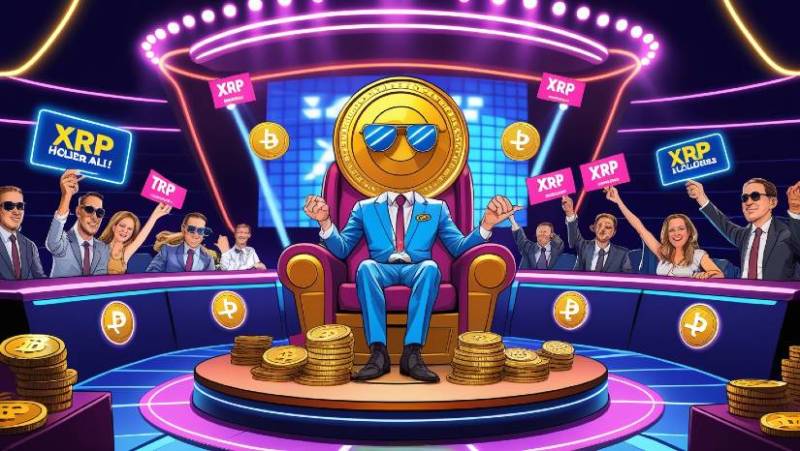
XRP, the native token of the XRP Ledger, has seen a surge in interest lately. Its price rally and use in real-time payment solutions have put XRP in the spotlight. Here's a closer look at the biggest XRP holders and how the token's distribution affects the market.
Ripple Labs, the company behind XRP, is the largest holder with 46 billion tokens. Most of these XRP are locked in escrow to regulate supply and maintain market stability. This structured release ensures a controlled flow of XRP into the market, preventing drastic price fluctuations due to sudden token sales.
Chris Larsen, Ripple Labs' co-founder, is another major holder with approximately 5 billion XRP tokens. This concentrated ownership highlights Ripple Labs' influence over XRP's market supply, sparking debates about the token's centralization and its alignment with blockchain's decentralized ethos.
Major cryptocurrency exchanges are also prominent XRP holders. Binance, for example, holds 1.83 billion XRP tokens, while Upbit owns 4.37% of the total supply, making it the largest among centralized exchanges. Other platforms like Bitbank and Korbit also hold significant portions.
The overall distribution of XRP among wallets varies widely. Wallets holding 1 million to 10 million XRP account for 6.42% of the total supply, while smaller wallets with holdings between 1,000 and 100,000 XRP control about 7.53%. This reveals a skew toward larger holders, with smaller investors representing a minor portion of the total supply.
Data from Coincarp shows that the top 10 wallets collectively hold more than 41% of XRP's total supply. Expanding it to the top 20 brings this figure up to 50.3%. Such high concentration comes with both opportunities and risks. It allows for greater institutional involvement, which can increase liquidity and stability. However, on the other hand, it threatens market manipulation and price volatility if major holders decide to liquidate.
This concentrated distribution of XRP has sparked discussions about its potential impact on market behavior. If large holders, including Ripple Labs or major exchanges, sell a substantial portion of their holdings, it could trigger significant price drops. On the other hand, controlled releases and continued market confidence could maintain price stability and even encourage growth.
The fact that Ripple Labs is the dominant owner of XRP also enables them to shape their ecosystem. While some experts feel this centralized approach—which has been evident in their successful adoption and partnerships—contradicts a core principle of any cryptocurrency, others highlight its effectiveness in driving XRP's success.
XRP's recent price surge, fueled by Ripple's legal victories and favorable macroeconomic conditions, has piqued investor interest. However, accumulating XRP has become more expensive, with 10,000 tokens now costing over $32,000 compared to just $4,900 months ago. Some advocates, like Edo Farina, emphasize the transformative potential of owning significant quantities of XRP, envisioning long-term financial freedom for holders.
While some optimists predict XRP might reach new highs, likely even as high as $100 per XRP, due to increased institutional use and regulatory clarity, skeptics point out challenges in competing with the wider market, regulatory uncertainty, and volatility inherent in cryptocurrencies.
Investors are advised to thoroughly assess XRP's distribution, tokenomics, and market trends before making decisions. As with any cryptocurrency, the balance between risk and reward remains critical in navigating this dynamic and rapidly changing sector.
Disclaimer:info@kdj.com
The information provided is not trading advice. kdj.com does not assume any responsibility for any investments made based on the information provided in this article. Cryptocurrencies are highly volatile and it is highly recommended that you invest with caution after thorough research!
If you believe that the content used on this website infringes your copyright, please contact us immediately (info@kdj.com) and we will delete it promptly.
-

-
- Consensus 2026 Miami: Web3, Blockchain, Cryptocurrency, NFTs, Metaverse, Conference, May 5th — Where Wall Street Meets the Digital Frontier
- May 01, 2026 at 11:27 pm
- Miami buzzes as Consensus 2026 approaches on May 5th, highlighting Web3, blockchain, crypto, NFTs, and the metaverse's shift from hype to institutional and sustainable reality.
-
-
- Bitcoin Miners Electrify the Grid: Ohio Gas Plant Acquisition Powers Up a New Era for Digital Gold
- Apr 30, 2026 at 10:38 pm
- The Bitcoin mining industry is undergoing a significant transformation, with major players aggressively expanding operations and strategically acquiring energy assets like Ohio gas plants to solidify their future in the digital economy.
-
-
- Solana's Slippery Slope: Price Prediction Points to Resistance Loss and Potential Further Drops
- Apr 30, 2026 at 09:08 pm
- Solana is struggling to break key resistance, signaling potential downside. Repeated rejections at $86-$88, coupled with a broken short-term pattern, point to targets as low as $67, or even $40, as sellers maintain control. Investors should watch critical support levels closely.
-
-
- NYC's New Beat: Staking Systems, USD1, and Governance Drive Crypto's Next Wave
- Apr 30, 2026 at 03:02 pm
- From lucrative USD1 earning events to robust governance models, the crypto sphere is buzzing with innovations reshaping how we engage with digital assets, focusing on long-term commitment and stablecoin utility.
-
- OKX Unveils Agent Payments Protocol: Ushering in a New Era of AI Transactions
- Apr 30, 2026 at 02:53 pm
- OKX launches its Agent Payments Protocol (APP), an open standard for AI-driven commerce, enabling agents to manage full business cycles. Explore the implications for AI transactions and agentic payments.